
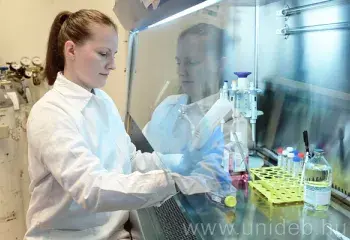
A bile acid naturally present in the body (ursodeoxycholic acid) may contribute to the growth, spread, and metastasis of ovarian tumors, according to a study by researchers at the University of Debrecen. This finding is significant because previous studies on this substance had only demonstrated anticancer effects. The research highlights that substances produced by gut bacteria can affect different types of tumors in varying ways. The researchers have received the Publication Award from the University of Debrecen and the Count István Tisza Foundation for the University of Debrecen for their paper presenting these findings.
News
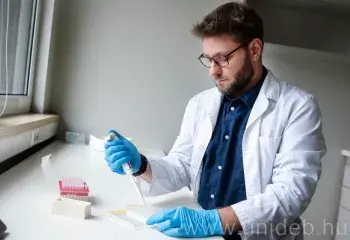
A form of vitamin D significantly reduced a dangerous inflammatory reaction associated with leukemia in laboratory studies, according to research by scientists at the University of Debrecen. This finding could lead to the development of new adjunctive treatments in the long term, but for now, vitamin D is not a substitute for life-saving steroid therapy. The researchers reported their findings in a prestigious international medical-biological journal, and their article has now been recognized with the Publication Award from the University of Debrecen and the Count István Tisza Foundation for the University of Debrecen.
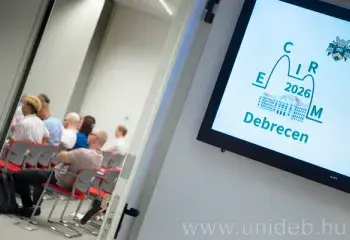
It is once again the University of Debrecen that hosted an international conference between September 6 and 9, dedicated to the precise understanding of inorganic chemical processes that are crucial to modern drug development, industrial catalysis and environmental protection technologies. At the most prestigious European forum for the study of inorganic reaction kinetics and mechanisms, the 7th ECIRM international conference, there were more than 60 researchers presenting their latest findings.
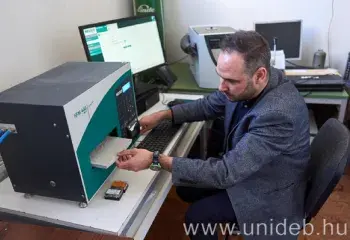
The general properties and the resistance of so-called aerogel materials, which are increasingly used in the construction, automotive, aerospace and oil industries, have been tested at the Faculty of Engineering of the University of Debrecen. The consequent findings of our researchers may contribute to further growth in the application of aerogels.

Gábor Sramkó, Assistant Professor at the Faculty of Science and Technology, has received unique international recognition. The Ministry of Education and Science of Mongolia honored him with a state award for his work in developing Mongolian-Hungarian bilateral relations and education in Mongolia. The biologist-researcher, who specializes on the genetic protection of endangered plant and animal species, received the highest professional recognition, awarded to foreigners only in exceptional cases.
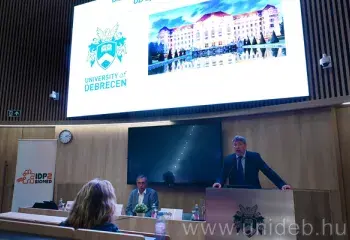
In 2026, the University of Debrecen hosted the annual meeting of the Hungarian Biochemical Society, which will be held in conjunction with an international conference. The event is the most prestigious domestic forum in the field of biochemistry, featuring scientific presentations and professional discussions, and two faculty members from the university will also receive prestigious professional recognition. The three-day conference opened on Wednesday, August 26, at the Learning Center.
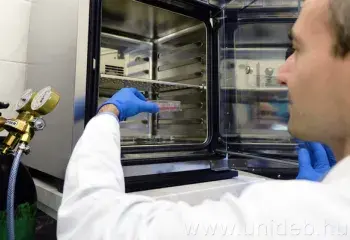
A more thorough recognition and understanding of the various cell types in cartilage may lead to the development of new therapeutic options for the treatment of osteoarthritis. The latest research findings on this topic have been analyzed and synthesized by Csaba Matta, a researcher at the University of Debrecen, and his co-authors. His review article is now published in Nature Reviews Rheumatology, one of the leading journals of the field. The scientific achievements of his work have also been recognized by earning a Publication Award from the University of Debrecen and the Count István Tisza Foundation for the University of Debrecen.
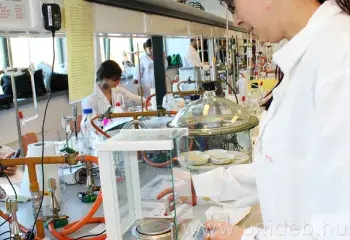
Researchers at the Faculty of Engineering of the University of Debrecen have investigated a physico-chemical treatment method for so-called bathroom greywater (BGW). This is water that has already been used once in the bathroom (gently) but can be reused for certain non-potable purposes after treatment. The findings were published in the journal Results in Engineering. This article has also been honored with a Count István Tisza Foundation for the University of Debrecen and the University of Debrecen Publication Award.
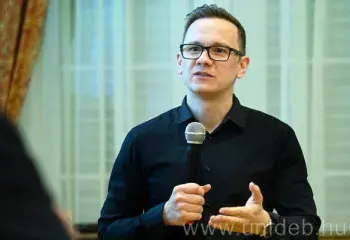
Bertalan Meskó is a “medical futurist” who believes that practical methods of futures studies, like foresight and scenario analysis, should play a greater part in scientific decision-making. In his view, the examination of possible futures and risks could turn out to be helpful in planning research programs more flexibly and in making well-informed decisions concerning research funding. Together with his co-authors, he has published his proposals related to this topic in Nature, one of the most prestigious scientific journals in the world. Meanwhile, Bertalan Meskó is already busy establishing a workshop at the University of Debrecen focused specifically on medical futures studies.

A research team at the Faculty of Health Sciences of the University of Debrecen has explored the connection between periodontal disease, as a risk factor for neurodegenerative diseases (NDDs), and its possible inflammatory, microbial and genetic background. The research team members concluded that periodontitis is normally associated with a heightened risk of developing later neuro-degenerative diseases, even after having been accounted for cardiovascular, cerebrovascular, metabolic and inflammatory comorbidities.